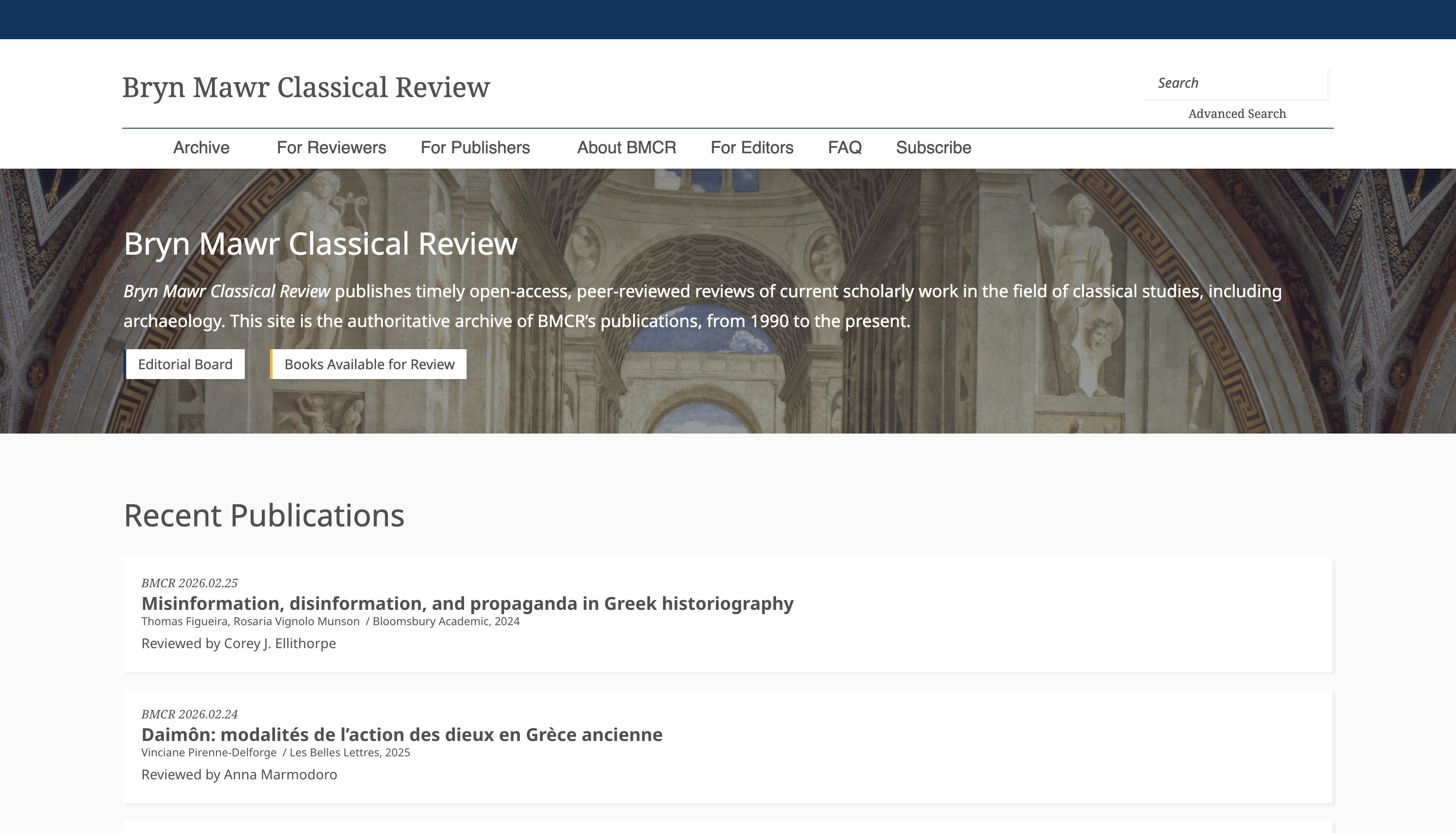
Bryn Mawr Classical Review — Platform Revitalization
Complete website rebuild for the web's oldest open-access scholarly journal, including archive migration, editorial workflow, and ongoing development.
In 2019, Bryn Mawr Classical Review — the web's oldest open-access peer-reviewed journal in the humanities — engaged me to complete the revitalization of their digital platform. Founded in 1990 by Richard Hamilton and James J. O'Donnell, BMCR was among the first online scholarly journals and had accumulated over 14,000 reviews by 2019. The existing infrastructure was showing its age. The journal sought a rebuild that would preserve the archive while streamlining operations and improving the experience for both editors and readers — a modern foundation that could support its editorial workflow while making its vast archive accessible to a global audience of classicists, archaeologists, and educators.
Review Workflow
A custom editorial system supporting the full lifecycle: receiving book submissions, assigning reviewers, managing revisions, and publishing reviews. The workflow accommodates the journal's volunteer reviewer model and editorial board structure while keeping the process manageable for a small staff.
Archive Import
Migration of 14,000+ reviews from legacy systems into the new platform. Each review was mapped to the new data model, preserving metadata, links, and cross-references. The import process handled decades of evolving formats and ensured no content was lost in transition.
Custom Tools & Plugins
- ID system — Persistent identifiers and clean URLs for reviews, books, and authors
- Review reminders — Automated nudges to keep the editorial pipeline moving
- Operations plugins — Custom WordPress development to support editorial tasks that off-the-shelf tools couldn't provide
Design & Accessibility
A simplified, readable design focused on content. Support for rich media where appropriate, with accessibility built in from the start so the journal remains usable by the broadest possible audience — including scholars using screen readers or other assistive technologies.
Ongoing Support
From server maintenance and backups to UX refinements and testing. The platform launched at bmcr.brynmawr.edu in March 2020, and we've continued to support BMCR as it publishes hundreds of reviews each month.